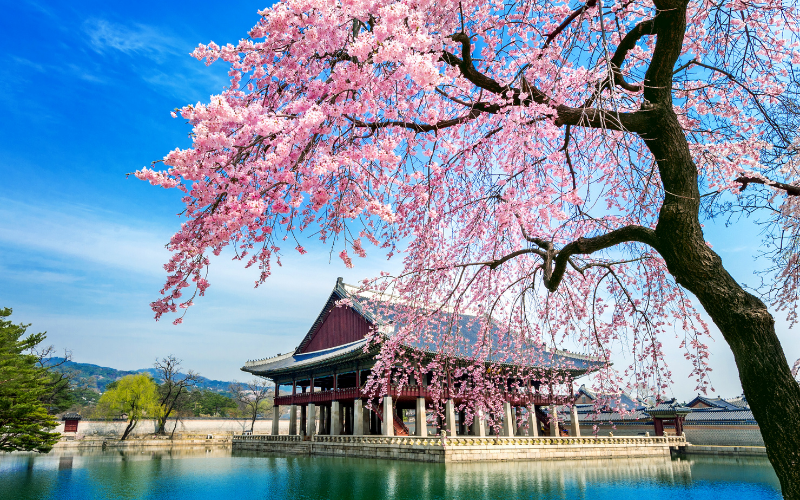
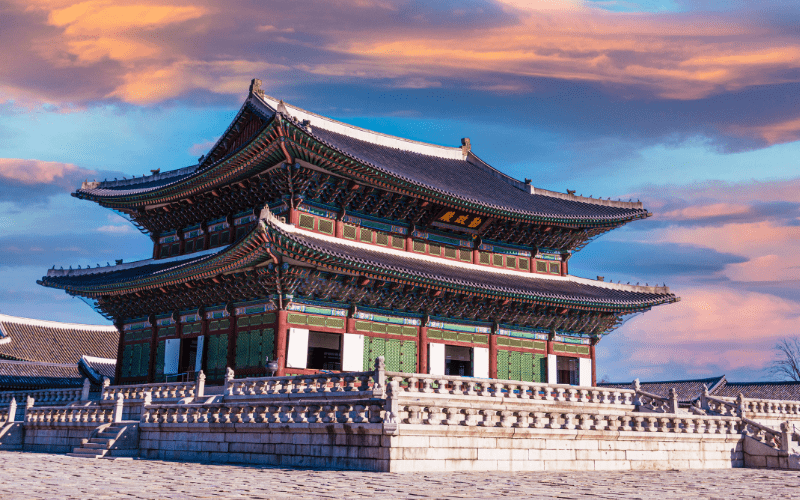
Gyeongbokgung Palace was the first and largest royal palace built during the Joseon Dynasty, established in 1395 at the center of the newly appointed capital, Hanyang (modern-day Seoul). As the principal residence of the Joseon kings, it symbolized the authority and stability of the dynasty. Among the Five Grand Palaces — including Changdeokgung, Changgyeonggung, Deoksugung, and Gyeonghuigung — Gyeongbokgung was the most important and grandest.
Despite suffering extensive destruction during the Japanese occupation, the Korean government has made continuous efforts to restore and preserve the palace complex, bringing back much of its original grandeur. These restoration projects aim to pass on Korea’s royal legacy and architectural elegance to future generations. Within the palace grounds, visitors can also explore the National Palace Museum of Korea and the National Folk Museum of Korea, offering deeper insights into the country’s royal customs and traditional culture.
To improve access, Yeongchumun, the palace’s western gate, was reopened to the public in December 2018, after being closed for 43 years. Previously, Gyeongbokgung was accessible only through three gates — Gwanghwamun (south), Sinmumun (north), and the east entrance near the National Folk Museum. With the reopening of Yeongchumun, the palace is now fully accessible from all directions, enhancing the visitor experience and connectivity with nearby areas like Seochon Village.